

Lidar Technology Is a Game Changer For Robot Vacuums
Lidar technology can be an exciting advancement for robot vacuums. It assists the vacuum to navigate and map out a space with precision and accuracy.
When purchasing a robot for a large house and a large house, the Lidar feature is an important feature to be considered. It can assist the robot to avoid triggering furniture legs, power cords or window blind cords.
Furniture Friendly
Robot vacuums that navigate by accelerating until they hit something can cause serious damage to furniture. They could scratch or scrape up the wood floor's surface or paint on furniture made of soft wood or chip away at the varnish on furniture attached to risers.
The most recent robotic vacuums make use of digital maps to ensure that they do not run into furniture and obstacles. This technology allows the robot to create an internal map of your home, updating it as furniture moves or new areas are discovered.
Another popular way to prevent furniture damage is to use bumpers that fit on the robot's sides as well as its base. The bumpers stop the robot from rubbing furniture, and they can also offer some protection for furniture that is delicate like marble tables or upholstered chairs. Certain robots also have the option to set up virtual barriers in their apps, which instruct the robot not to go where you want it avoid, a feature called no-go zones. They are helpful in areas with lots of cords, such as behind the entertainment center or computer where the robot might get tangled in them.
Other preventative steps that you can take are to ensure that your robot does not run into any open cabinets or drawers, where small items like nails and screws might be hidden. Also, make sure that you are regularly emptying and rinsing the trash bin of your robot in the event that it has one, and wiping its sensors or cameras as needed to keep them free of dirt and dust.
If you take the proper precautions, you are able to protect your furniture from damage by robots. Choose a robot with digital mapping to avoid damaging furniture. Invest in bumpers when you have furniture that is delicate. If you have a large open space and want to use your robot in an area that has lots of furniture, search for a battery that lasts a long time and an ample dust bin so that the robot is able to finish the task without having recharge more than once.
Adjustable Suction Power
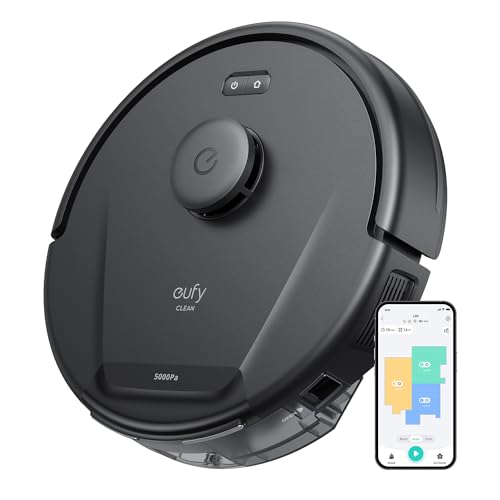
The best robot vacuums have powerful motors and filtration systems that offer top-notch suction power. They are also designed to be quiet, so that you don't disturb your family or pets while they are working. They also have features such as intelligent mapping and zone-cleaning to can make them more efficient in moving furniture.
Lidar technology is a game changer in robotic vacuums and mops since it allows them to move more efficiently and with greater accuracy. Contrary to 'Bump and run models, which depend on physical contact with furniture, lidar is able to send laser beams into a room to map out the space. The sensors determine how long the lasers to bounce off objects and return to them which allows robots to create accurate maps of the space. Lidar maps help smart cleaners avoid obstacles and work in low-light environments where cameras and other sensors can struggle.
ECOVACS has incorporated lidar into its top-of-the-line robots, including the X1 OMNI which is an all-in one. It utilizes a patent-pending laser sensor and SLAM technology (Self-Localization Mapping) to create a 3D map while it cleans. This helps to avoid furniture, obstacles and other obstacles. The X1 OMNI can completely clean your home without the need for user intervention. It comes with two tanks of water that allow it to clean up to 1.5 hours per hour. It also has a powerful motor that can handle 5,000Pa suction.
Lidar is a game changer in robotic mops, and it lets X20 OMNI provide an outstanding clean on carpets and hard floors. This premium model comes with the latest generation of automatic mop lifting that is compatible with carpets, and is powered by the patented OZMO(tm) Turbo spinner that can rotate up to 180 times per minute to provide exceptional scrubbing capability. Its all-in-one OMNI station is easy to use, featuring a built-in YIKO voice assistant as well as an intuitive touchscreen that allows hands-free control. It can be used to separate clean and dirty water, fill and speedily dry the mop, and automatically empty the dustbin and return it to its charging station base when it's full.
Advanced Mapping and Navigation
Lidar is laser sensing technology that uses light beams to determine distance. These beams bounce of obstacles and surfaces, and return to the sensor. This lets the robot create an accurate map of its surroundings in real time. The robot can avoid hitting furniture, walls, rugs, and other objects while cleaning. Lidar is more efficient, faster and more precise and has more range than other obstacle detection sensors such as ultrasonic or infrared.
SLAM (Simultaneous Localization and Mapping) and other navigation and localization algorithms can help lidar-based systems navigate the home more effectively than accelerometers or gyroscopes particularly in low-light conditions. These navigation capabilities allow the robot to better comprehend its surroundings and devise an efficient cleaning route.
While these advanced mapping features aren't necessary for all vacuums, they could make a significant impact on how your robot performs and how quickly it can finish the job. A vacuum equipped with mapping capabilities can finish an area faster than models that don't have it, and it can avoid multiple collisions that could cause damage or energy loss to furniture and the vacuum.
In addition to mapping, some robots equipped with lidar sensors have built-in bumper sensors which detect when they bump into furniture or other obstacles. lidar robot vacuum can cause the vacuum to stop moving and retract its brush to stop any damage from happening. These sensors can also help the robot navigate back to its dock if it gets stuck.
Certain models are equipped with infrared sensors that can detect the possibility of a robot hitting walls or furniture while moving around the room. The AVEL10, for instance, uses this technology to stop the vacuum from falling off stairs or steps and further reduce the risk of collisions with walls or furniture.
Other technologies, such as cameras or gyroscopes, may aid in navigation. These systems are typically more affordable but they are not as effective as Lidar. They can also be difficult to identify certain landmarks under various lighting conditions.
Edge Detection
Lidar tracks the space and also the distances between objects. This allows the robot to determine where it should be in the room, ensuring that it doesn't spend its time cleaning your shoes or under your couch, for example. It can also avoid bumping into furniture or other obstacles in the dark. In our tests, robots that use lidar are less likely to get stuck on obstacles than those using traditional sensors, such as infrared and ultrasonic.
Many vacuum robots also have sensors for cliffs to stop them from falling down stairs. They are usually located on the robot bumpers and work through reflecting infrared back to the sensor. If the sensor detects an object that is too close, it informs the vac to alter its path.
Some robots also have sensors that allow them to navigate around the house. Some models have obstacle sensors that use an incline wheel or beam of light to detect the presence of an obstacle. These sensors are more effective at detecting large objects, such as shelves or legs for furniture and are less effective at detecting small objects, such as socks or rug tassels.
For advanced navigation and mapping seek out a robot that utilizes SLAM (Simultaneous Localization and Mapping). SLAM creates an image of the surrounding environment using cameras. This enables it to understand the robot's position at any time and form an efficient cleaning route. It's a good idea to select a model with this technology as it can help you avoid a lot of frustration.
A number of robotic vacuums come with gyroscopes to keep them from bumping into obstacles. They can also be used to provide a more precise visual of the room in an app, enabling you to establish areas that are not allowed to be walked through and clean up by areas.
You may still experience issues with a vacuum robot which has SLAM and Gyroscopes. Try out several models to determine which is the most reliable in navigation.